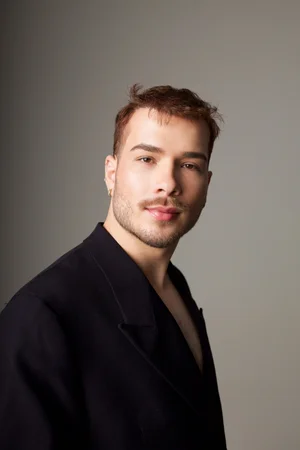
We all know that feeling of leaving the salon with a fresh haircut. But have you ever wondered how modern hairdressing developed, who changed the way we cut hair, or how often you should really be trimming your ends? Let's explore the history, creativity and science behind one of the most important services in the beauty industry.
More than just cutting hair: The art of shape and movement
A haircut might seem like one of the simplest services in a salon, but there is so much more to it than picking up a pair of scissors.
A great haircut is about understanding shape, proportion, texture, movement and balance. It is about knowing how hair naturally falls, how it responds to different techniques and how to create a style that complements someone's features and personality.
Every section, angle and movement of the scissors has a purpose.
And although cutting hair has existed for thousands of years, the way we approach modern haircuts has changed dramatically over time.
A little history: How did modern haircutting begin?
Hair cutting has been part of human culture for centuries. In Ancient Egypt, Greece and Rome, hairstyles were closely connected to social status, identity and fashion.
However, for much of history, elaborate hairstyles were maintained through curling, setting, wigs, accessories and styling products.
By the 1950s, women's hairstyles often involved rollers, backcombing and plenty of hairspray. A visit to the salon was frequently necessary just to maintain the shape.
But one British hairdresser had a completely different vision.
His name was Vidal Sassoon.
Vidal Sassoon: The man who changed the way we cut hair
insert historical Vidal Sassoon photograph
Born in London in 1928, Vidal Sassoon grew up in difficult circumstances. He spent part of his childhood in an orphanage and left school at just 14 years old.
His journey into hairdressing began when his mother encouraged him to become an apprentice in a London salon.
What started as an apprenticeship would eventually become one of the most influential careers in the history of professional hairdressing.
In 1954, Sassoon opened his first salon at 108 New Bond Street in London.
At the time, most fashionable women's hairstyles relied heavily on rollers, teasing and hairspray. Sassoon believed there was a better way.
His philosophy was simple but revolutionary: the haircut itself should create the shape, rather than relying on styling to hold it together.
Inspired by the geometric principles of the Bauhaus architecture and design movement, he began developing precise cuts based on angles, structure and the natural movement of hair.
Instead of creating elaborate hairstyles that needed constant maintenance, he wanted hair to fall naturally into shape.
The Five-Point Cut: A moment that changed hairdressing
One of Sassoon's most famous creations was the Five-Point Cut, introduced in 1963.
The haircut featured short, carefully structured sections around the head, with precise geometric lines that created a distinctive silhouette.
It became particularly famous when worn by British fashion designer Mary Quant and model Peggy Moffitt.
Another iconic moment came when Sassoon cut actress Nancy Kwan's long hair into a striking geometric bob.
The transformation attracted international attention and helped establish a completely new approach to modern hair design.
Suddenly, haircuts were not just about removing length. They were about architecture, precision and individuality.
Women could wash their hair, let it dry naturally and still enjoy a beautifully structured result.
It was a genuine turning point in the industry.
The legacy continues: Sassoon Academy in London
Perhaps one of the most fascinating parts of this story is that Vidal Sassoon's influence did not end with his haircuts.
He believed that professional education was essential to the future of hairdressing.
This philosophy helped establish the Vidal Sassoon Academy, which became internationally recognised for its structured approach to cutting, technical education and creative development.
Today, the Vidal Sassoon Academy continues to operate in London, bringing together students and professional hairdressers from around the world.
Its educational philosophy continues to focus on precision, geometry, technique and creativity.
More than just a name, Sassoon represents a way of thinking about hairdressing: understanding the structure before creating the style.
Understanding the different haircutting techniques
Modern hairdressing offers a wide range of cutting techniques. Each one creates a different result, and choosing the right approach depends on the client's hair texture, density, desired shape and lifestyle.
Let's look at some of the most common techniques.
1. One-Length Haircut
This technique creates a consistent perimeter, with the hair cut to the same length.
It is often used to create a clean, solid shape and can help give the appearance of fuller ends.
It is particularly popular for blunt bobs and long, one-length styles.
2. Layered Haircut
Layering involves cutting different sections of hair at different lengths to create movement, dimension and shape.
Layers can be subtle or more pronounced, depending on the desired result.
They are especially useful for removing excess weight, creating volume and giving the hair more movement.
3. Graduated Haircut
Graduation is created by building weight through carefully controlled angles and lengths.
It can produce a beautiful structured shape, particularly around the back of the head and neckline.
Graduated bobs are a classic example of this technique.
4. Texturising
Texturising techniques are used to adjust weight, soften lines and create movement within a haircut.
Depending on the hair and desired finish, professionals may use point cutting, slide cutting or specialised texturising scissors.
The goal is not simply to make the hair thinner. It is to create the right balance, allowing the style to move naturally.
5. Precision Haircutting
Precision cutting focuses on accuracy, clean lines, angles and structure.
Every section is carefully considered to create a specific shape.
This approach is strongly associated with the Vidal Sassoon school of haircutting and remains an important foundation of professional hairdressing education.
How often should you get your hair cut?
This is one of the most common questions clients ask.
And the honest answer is: it depends!
Hair grows continuously, but different styles lose their shape at different rates.
A short, structured haircut may need regular maintenance, while longer hair can often go several weeks without losing its overall appearance.
Here is a general guide:
Haircut styleRecommended frequencyVery short cuts and pixiesEvery 4–6 weeksShort bobsEvery 6–8 weeksMedium-length hairEvery 8–10 weeksLong hairEvery 8–12 weeksLong layersEvery 8–12 weeksFringes / bangsEvery 3–4 weeks
These are general recommendations rather than strict rules. Your hair's condition, growth rate, texture and personal styling preferences all influence how often you should visit the salon.
What if you're trying to grow your hair?
Here is something many people get wrong: cutting your hair does not make it grow faster.
Hair growth happens at the scalp, not at the ends.
However, regular trims can help remove damaged and split ends before they lead to further breakage.
If your goal is to grow your hair longer, you don't necessarily need a full haircut every six weeks.
Instead, your stylist can recommend small maintenance trims based on your hair's condition and how much length you want to preserve.
The important thing is to maintain healthy ends without removing more length than necessary.
Why a professional consultation makes all the difference
Have you ever shown your stylist a picture of a haircut you absolutely loved, only to discover that the result looked completely different on your own hair?
There is a reason for that.
A haircut that looks beautiful on someone else may not behave the same way on you.
Hair density, natural texture, growth patterns, face shape and even your daily routine can influence the final result.
Before starting a haircut, a professional should consider:
Hair texture: Is the hair straight, wavy, curly or coily?
Density: Is the hair fine, medium or thick?
Natural movement: How does the hair fall without styling?
Face shape: Which shapes and lengths complement the client's features?
Lifestyle: How much time does the client want to spend styling their hair?
Hair history: Has the hair been chemically treated, coloured or previously damaged?
A good consultation helps the professional understand not only what the client wants, but also what will realistically work for them.
Sometimes the best haircut is not necessarily the one in the inspiration photo. It is the one adapted to your individual hair.
How to maintain your haircut between salon visits
A beautiful haircut deserves the right care at home.
Here are a few simple habits that can help maintain the shape and condition of your hair:
1. Use the right shampoo and conditioner
Choose products according to your hair type and scalp needs. Healthy-looking hair starts with an appropriate care routine.
2. Be careful with heat styling
Frequent use of straighteners, curling irons and hairdryers can contribute to dryness and breakage. Always use a suitable heat protectant and avoid excessive temperatures.
3. Don't ignore your ends
If your ends become excessively dry, tangled or split, it may be time for a professional trim.
4. Learn how to style your haircut
Ask your stylist how to recreate your salon finish at home. Sometimes a small change in drying direction or brush technique can make a huge difference.
5. Choose a haircut that works with your natural texture
The easier your haircut is to manage with your natural hair, the more likely you are to enjoy it every day.
A final thought: A great haircut never goes out of style
Trends will always change. New techniques will appear, different shapes will become fashionable and inspiration will continue to come from fashion, culture and social media.
But the fundamentals of a great haircut remain the same.
Understanding hair, respecting its natural movement and knowing how to create the right shape are skills that require practice, technical knowledge and creativity.
Vidal Sassoon once helped the industry see haircutting in an entirely different way. His legacy reminds us that a great haircut is not simply about following a trend. It is about design, precision and understanding the person sitting in your chair.
Because sometimes, the most beautiful transformation doesn't require a new colour or a dramatic change. It simply starts with the right haircut.